Feb 17, 2026 / 2 min read / AI Engineering
Codex-Spark: What Latency Actually Changes
Codex-Spark: What Latency Actually Changes
Codex-Spark is often framed as a hardware milestone, but for developers it is mainly a workflow shift. Lower latency changes how quickly you can correct direction before a change gets large.
That is the real upside: faster supervision, not automatic correctness.
At a glance
- Low latency helps teams work in smaller, safer iterations.
- It does not remove the need for architecture judgment or review discipline.
- The gains show up when you pair speed with strict process.
Workflow map
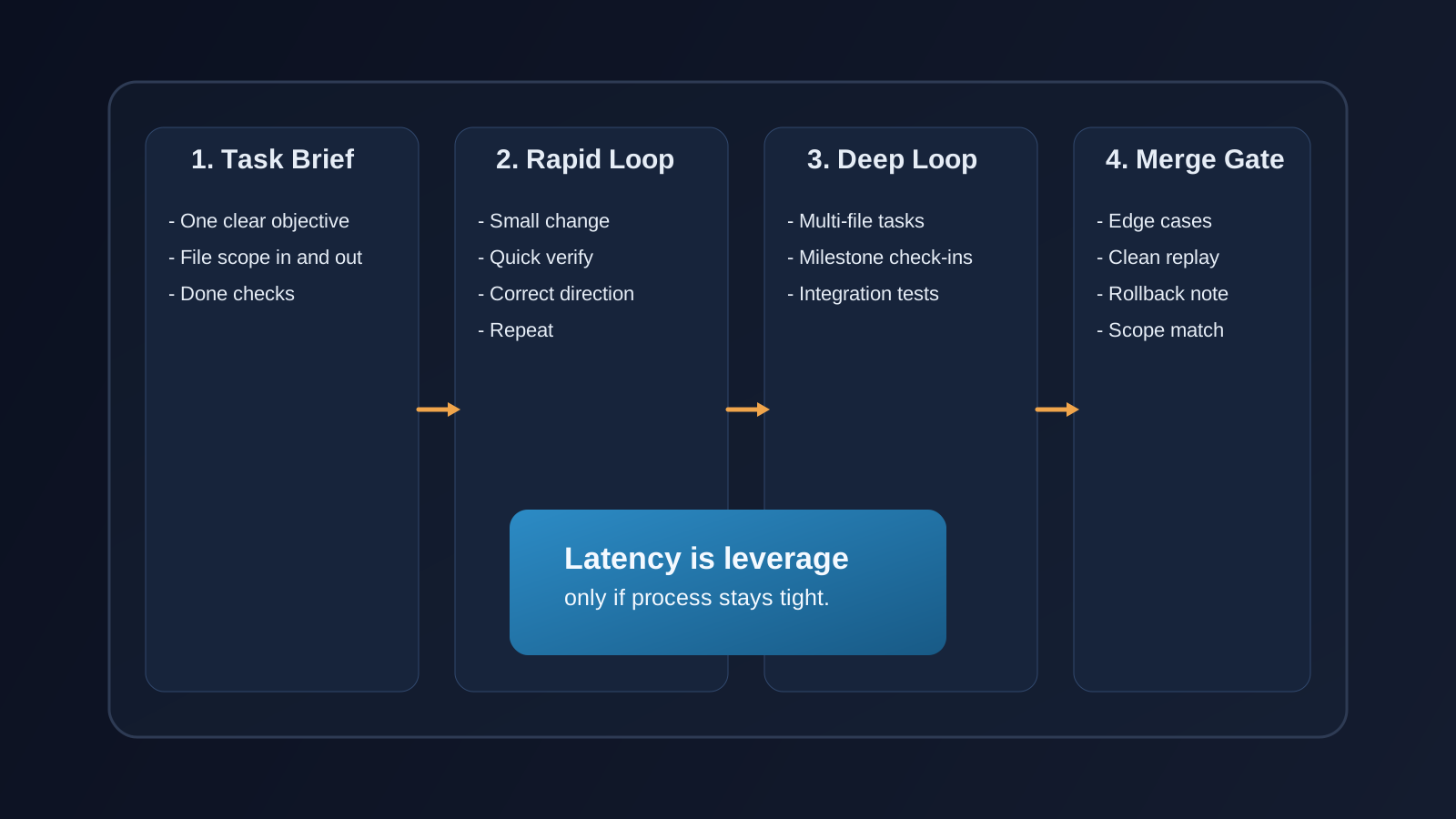
Use this flow as a default operating model: Task Brief -> Rapid Loop -> Deep Loop -> Merge Gate.
Why faster loops help
When responses return quickly, teams naturally behave better:
- they interrupt drift earlier
- they run verification commands more often
- they keep diffs smaller and easier to review
- they avoid the "single giant prompt" pattern
This is where latency pays off in practice.
What low latency still does not fix
Even with fast responses, Codex-Spark can still produce:
- clean-looking code with broken edge behavior
- correct local fixes that break module boundaries
- structural overreach outside requested scope
Latency removes waiting time. It does not replace product context, testing standards, or code review.
The operating rhythm that works
1. Write a tight task brief
Before execution, specify:
- one clear objective
- files in scope
- files out of scope
- acceptance checks
2. Use short rapid passes
Cycle through: small change -> verify -> adjust -> repeat.
3. Escalate to deep loop only when needed
Use longer runs for cross-file or integration-heavy tasks, with milestone check-ins.
4. Keep hard merge gates
Before merge, require:
- boundary and negative-case tests
- clean-environment replay
- rollback note
- diff scope matching the brief
If one gate fails, it is not done.
Weekly scorecard (small but useful)
Track these four metrics for AI-assisted tasks:
| Metric | Why it matters |
|---|---|
| Time to first working PR | Measures practical speed, not demo speed |
| Intervention count | Shows how much steering is actually required |
| Reopen rate | Captures quality misses after merge |
| Scope drift incidents | Catches hidden process failures |
If speed improves but reopen rate rises, your process is loose.
Bottom line
Codex-Spark is valuable when you convert latency into tighter supervision.
- speed helps
- process decides quality
- smaller scoped iterations beat fast oversized diffs
Treat low latency as an operational advantage, not a quality guarantee.
Sources
Newsletter
Follow new posts through RSS or via email updates.